

Understanding Long QT on Apple Watch ECG
Long QT indicates that the heart is taking longer than usual to reset between beats.
2 min read
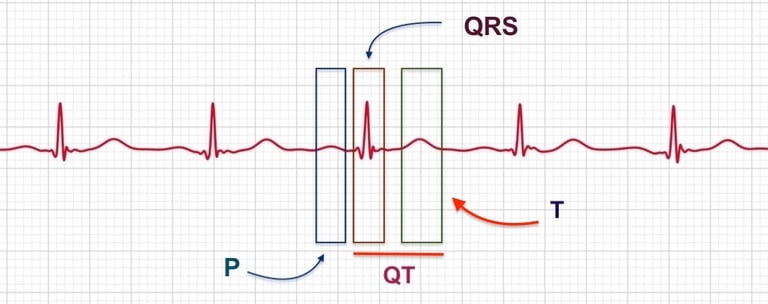
When an ECG shows a "long QT", it indicates that the heart is taking longer than usual to reset between beats. The QT interval on an ECG represents the time required for the heart's electrical system to recharge and prepare for the next heartbeat. If this interval is extended, it is termed a "prolonged QT."
What Does a Prolonged QT Mean?
In a typical ECG, each heartbeat is represented by a P wave, a QRS complex, and a T wave. The QRS complex, in particular, reflects the electrical activity in the ventricles.
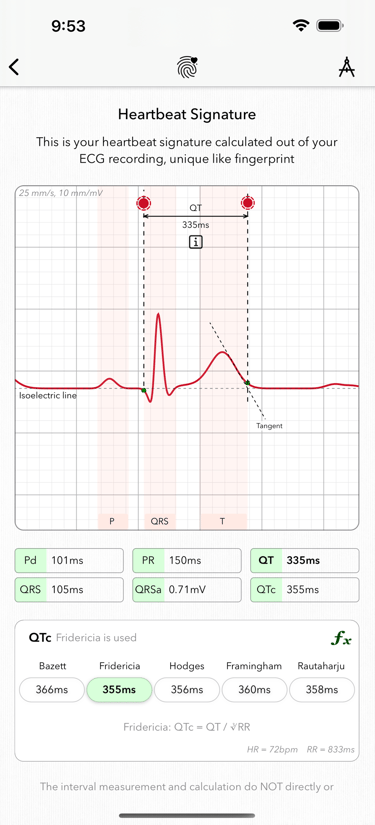
A prolonged QT interval on an ECG indicates that the heart's electrical system is taking longer than usual to recharge between beats. This extended period is measured from the start of the Q wave to the end of the T wave, encompassing the time it takes for the heart's ventricles to contract and then recover before the next beat.
While a prolonged QT interval can be benign, it’s important to monitor it because it may increase the risk of developing a dangerous type of irregular heartbeat called torsades de pointes. This condition can lead to dizziness, fainting, or even sudden cardiac arrest if not managed promptly.
Are Long QT Dangerous?
Limitations of Apple Watch ECG in Measuring QT Interval
The Apple Watch ECG provides a single-lead recording, which differs from the 12-lead ECGs used in medical settings. Since QT measurement relies on accurately detecting the end of the T wave and varies with heart rate, single-lead ECGs like those from the Apple Watch may not always provide the most precise QT interval calculation. Additionally, factors such as heart rate fluctuations and algorithmic estimations can influence the reading. If you see a prolonged QT, it is advisable to consult a healthcare professional for a full evaluation rather than relying solely on the Apple Watch ECG.
Healthcare providers will typically assess the QT interval in the context of other findings and risk factors to determine if further testing or treatment is necessary. In many cases, simple adjustments to medications or lifestyle can effectively manage a prolonged QT.
The main concern with a prolonged QT is its potential to make the heart more susceptible to irregular rhythms. While this usually does not lead to complications, in certain cases, it could trigger an abnormal heart rhythm that might result in symptoms such as dizziness, fainting, or, in rare instances, more severe outcomes.
Next Steps
If a prolonged QT is observed on an ECG, further investigations may be warranted to determine the underlying cause and whether any interventions are necessary. This could involve adjusting medications, correcting electrolyte levels, or other measures to ensure proper heart function.