

Understanding Premature Ventricular Contractions (PVC) on Apple Watch ECG
A Premature Ventricular Contraction (PVC) is an early heartbeat that originates in the ventricles, the lower chambers of the heart.
2 min read
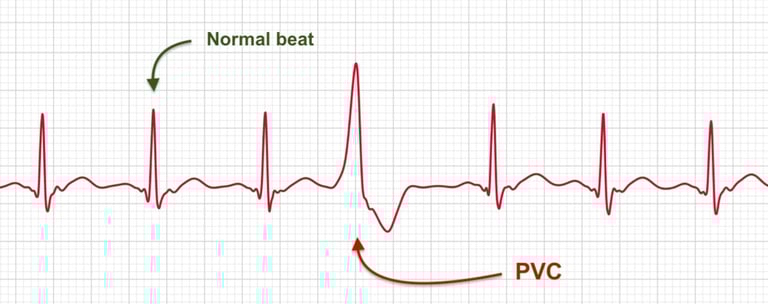
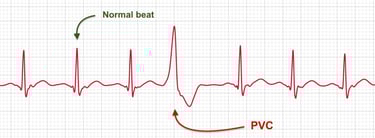
A Premature Ventricular Contraction (PVC) is an early heartbeat that originates in the ventricles, the lower chambers of the heart. Under normal circumstances, the heartbeat starts in the SA node, travels through the atria, and then down to the ventricles, prompting the heart to contract and pump blood. With a PVC, an extra signal starts in the ventricles before the SA node has a chance to send its signal, resulting in a premature contraction.
Most people do not feel PVCs, but some might experience a sensation of their heart 'skipping a beat.' While this can be unsettling, PVCs are generally benign, especially when they occur infrequently.
How PVCs Appear on an Apple Watch ECG
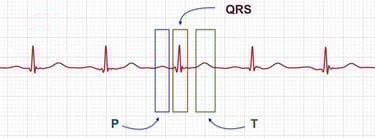
In a typical ECG, each heartbeat is represented by a P wave, a QRS complex, and a T wave. The QRS complex, in particular, reflects the electrical activity in the ventricles.
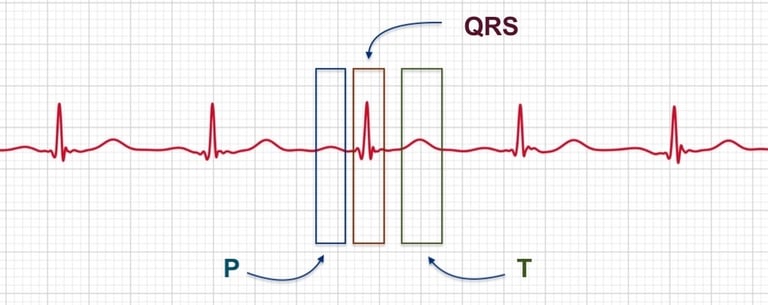
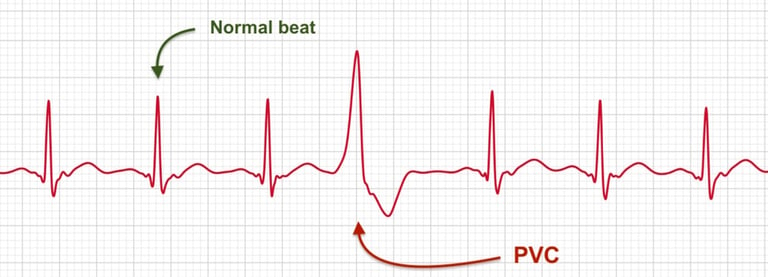
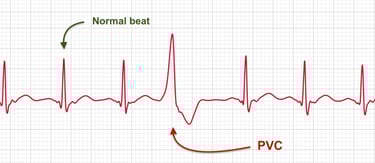
During a PVC, the QRS complex appears earlier than expected and looks different—often wider and more unusual—compared to the normal beats. On an ECG, a PVC is recognized by this premature, wide, and bizarre-looking QRS complex. Following the PVC, there is often a pause before the next regular heartbeat, known as a compensatory pause, as the heart resets its rhythm.
In most cases, PVCs are harmless and do not require treatment. They are common in healthy individuals and can be triggered by factors like stress, caffeine, or lack of sleep. However, frequent PVCs or those that cause significant symptoms such as dizziness, chest pain, or shortness of breath should be evaluated by a healthcare provider. In some cases, PVCs may indicate an underlying heart condition that needs further investigation.
Are PACs Dangerous?
Conclusion
Premature Ventricular Contractions are a common type of irregular heartbeat that generally do not pose a health risk. They are identified on an ECG by an early, abnormal-looking QRS complex, often followed by a pause. While they are usually not cause for concern, frequent PVCs or associated symptoms should prompt a medical consultation. Understanding PVCs can help you stay informed about your heart's health and seek appropriate care if necessary.