
Understand Long QT on Apple Watch ECG
Long QT means the heart is taking longer than usual to reset between beats. Learn what this finding means on Apple Watch ECG and how ECG+ helps you understand it.
4 min read

What is the QT Interval?
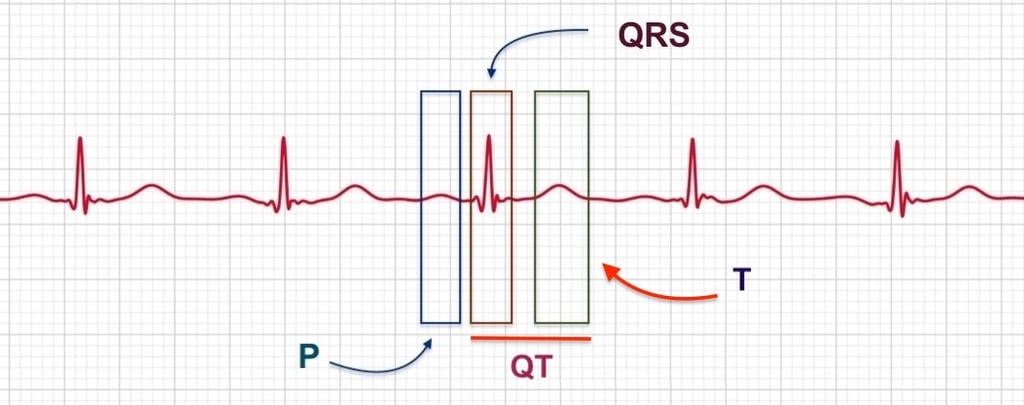
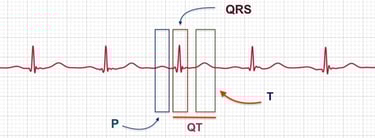
On a standard ECG, each heartbeat produces a recognisable wave pattern: a P wave, a QRS complex, and a T wave. The QT interval is the measurement from the start of the Q wave to the end of the T wave, representing the time it takes for the heart's ventricles to contract, then fully recover and recharge before the next beat.
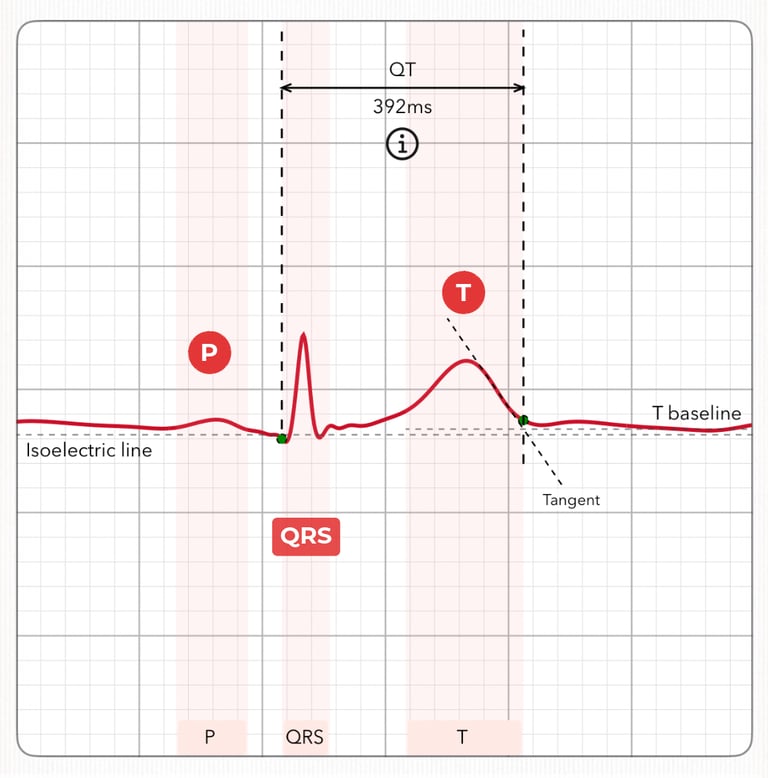
Because the QT interval naturally shortens at higher heart rates and lengthens at lower ones, clinicians use a corrected version called the QTc (QT corrected for heart rate). This allows for a more meaningful comparison regardless of how fast or slow your heart is beating at the time of the recording.
General QTc thresholds used in clinical practice:
Normal: under 440ms in men, under 460ms in women
Borderline: 440 to 460ms in men, 460 to 480ms in women
Prolonged: above 460ms in men, above 480ms in women
High risk: above 500ms in either sex
What Does a Prolonged QT Mean?
A prolonged QT interval means the heart's electrical recovery phase is taking longer than it should. This extended window creates a period of vulnerability where an abnormal electrical signal can trigger a dangerous arrhythmia called torsades de pointes, a rapid, chaotic heart rhythm that can cause sudden dizziness, fainting, or in rare cases, cardiac arrest.
Long QT can be either congenital (inherited) or acquired. Common acquired causes include:
Medications: certain antibiotics (such as azithromycin), antidepressants, antipsychotics, and antiarrhythmics are well-known QT-prolongers. Always check new medications with your doctor if you have a history of Long QT.
Electrolyte imbalances: low potassium, magnesium, or calcium levels can prolong the QT interval
Thyroid disorders: particularly hypothyroidism
Heart disease: structural heart conditions can affect the QT interval
Extreme bradycardia: a very slow heart rate naturally lengthens the QT
Is Long QT Dangerous?
For most people who see a prolonged QT on their Apple Watch ECG, it will not lead to serious complications. Many cases are mild, temporary, or caused by something easily corrected, such as a medication or a low electrolyte level.
However, Long QT should never be ignored. The main risk is torsades de pointes, which, while uncommon, can degenerate into ventricular fibrillation and become life-threatening. Risk is significantly higher when:
QTc exceeds 500ms
There is a personal or family history of unexplained fainting, seizures, or sudden cardiac death
Multiple QT-prolonging medications are being taken simultaneously
If your Apple Watch ECG shows a prolonged QT, it is important to share the recording with your doctor rather than monitoring it alone.
Apple Watch ECG and QTc: Important Limitations
Apple Watch records a single-lead ECG, similar to Lead I on a standard 12-lead ECG. While this is genuinely useful for detecting rhythm abnormalities like AFib, it has meaningful limitations when it comes to QTc measurement specifically.
A single-lead ECG is not 100% reliable for QTc. In clinical practice, QTc is typically measured across multiple leads, particularly leads II, V5, and V6, to find the longest QT interval, which is the most clinically significant. A single lead may not capture the T wave clearly enough to make an accurate measurement, especially if the T wave is flat, biphasic, or merges with a U wave.
Additionally, the Apple Watch algorithm applies its own heart rate correction formula, which may differ from the Bazett or Fridericia formulas used in clinical settings. Factors like movement artefact, poor electrode contact, and recording duration can all affect the accuracy of the QTc value displayed.
This does not mean a prolonged QTc on Apple Watch should be dismissed. It means it should be confirmed with a clinical 12-lead ECG before any diagnosis or treatment decision is made.
Limitations of Apple Watch ECG in Measuring QT Interval
Beyond QTc accuracy, it is worth noting that Apple Watch does not continuously monitor the QT interval. It only captures a snapshot during the 30-second recording. Long QT episodes that occur between recordings will not be captured. If you have symptoms such as unexplained fainting, palpitations, or dizziness, these should be investigated with ambulatory monitoring such as a Holter monitor, not Apple Watch ECG alone.
Next Steps if You See a Prolonged QT
If your Apple Watch ECG shows a prolonged QT interval, here is what to do:
Don't panic: a single reading is not a diagnosis
Note your symptoms: document any dizziness, fainting, or palpitations and when they occurred
Review your medications: check whether any current medications are known QT-prolongers
See your doctor: share your Apple Watch ECG recording and request a 12-lead ECG for confirmation
Get bloods checked: ask for potassium, magnesium, and calcium levels to rule out electrolyte causes
Avoid QT-prolonging triggers: until reviewed, avoid stimulants, excessive caffeine, and any new medications without checking with your doctor first